Last Updated on February 9, 2024 by Alex Roig
Cannabis cultivation is an art and science that requires a deep understanding of the plant’s lifecycle, especially the flowering stage. This stage is pivotal as it leads to the development of buds, which are the harvested part of the plant. The cannabis flowering stage is marked by specific changes in plant growth, nutrient requirements, and care techniques.
This guide provides an in-depth look at the cannabis flowering stage, detailing weekly progress, care tips, and expert advice for enhancing yield and plant health.
Be aware that handling, using, and/or distributing marijuana is federally illegal. This content does not encourage illegal activities or provide legal or tax advice. Ensure compliance with your local, state, and federal laws.

Article Overview:
- Explores the unique characteristics and importance of various cannabis plant parts during the flowering stage.
- Details the cannabis lifecycle, with a focus on the critical transitions and developments in the flowering phase.
- Breaks down the weekly progression of cannabis plants during flowering, noting specific growth and care nuances.
- Provides targeted advice for each phase of flowering, including nutrient management and environmental adjustments.
- Highlights a selection of auto-flowering cannabis strains, emphasizing their suitability for novice growers.
- Offers specialized tips for enhancing cannabis flower quality and yield, including plant sexing and bud support strategies.
The Anatomy of Flowering Cannabis
The Stalk and Fan Leaves
The stalk and fan leaves, though integral to the cannabis plants structure and iconic in appearance, play a limited role in the harvesting process due to their lower cannabinoid content.
Here are some more details about the cannabis plant.
Stalk
Acts as the primary support structure for the plant, holding up the branches and leaves. It’s crucial for the transport of nutrients and water throughout the plant but lacks the psychoactive and medicinal compounds found in the flowers.
Fan Leaves
Serve as the plant’s solar panels, absorbing sunlight and facilitating photosynthesis. They are the most recognizable part of the cannabis plant but contain only trace amounts of THC and CBD, making them less desirable for consumption or extraction.
Role in Plant Health
Despite their lower cannabinoid content, both the stalk and fan leaves are vital for the overall health and vigor of the cannabis plant, contributing to the growth and development of the buds.
Other Uses
While not useful for cannabinoid extraction, fan leaves and stalks can be repurposed in compost or as mulch, contributing to a sustainable cultivation practice.
Despite their lower cannabinoid content, both the stalk and fan leaves are vital for the overall health and vigor of the cannabis plant, contributing to the growth and development of the buds.

The Cannabis Flower
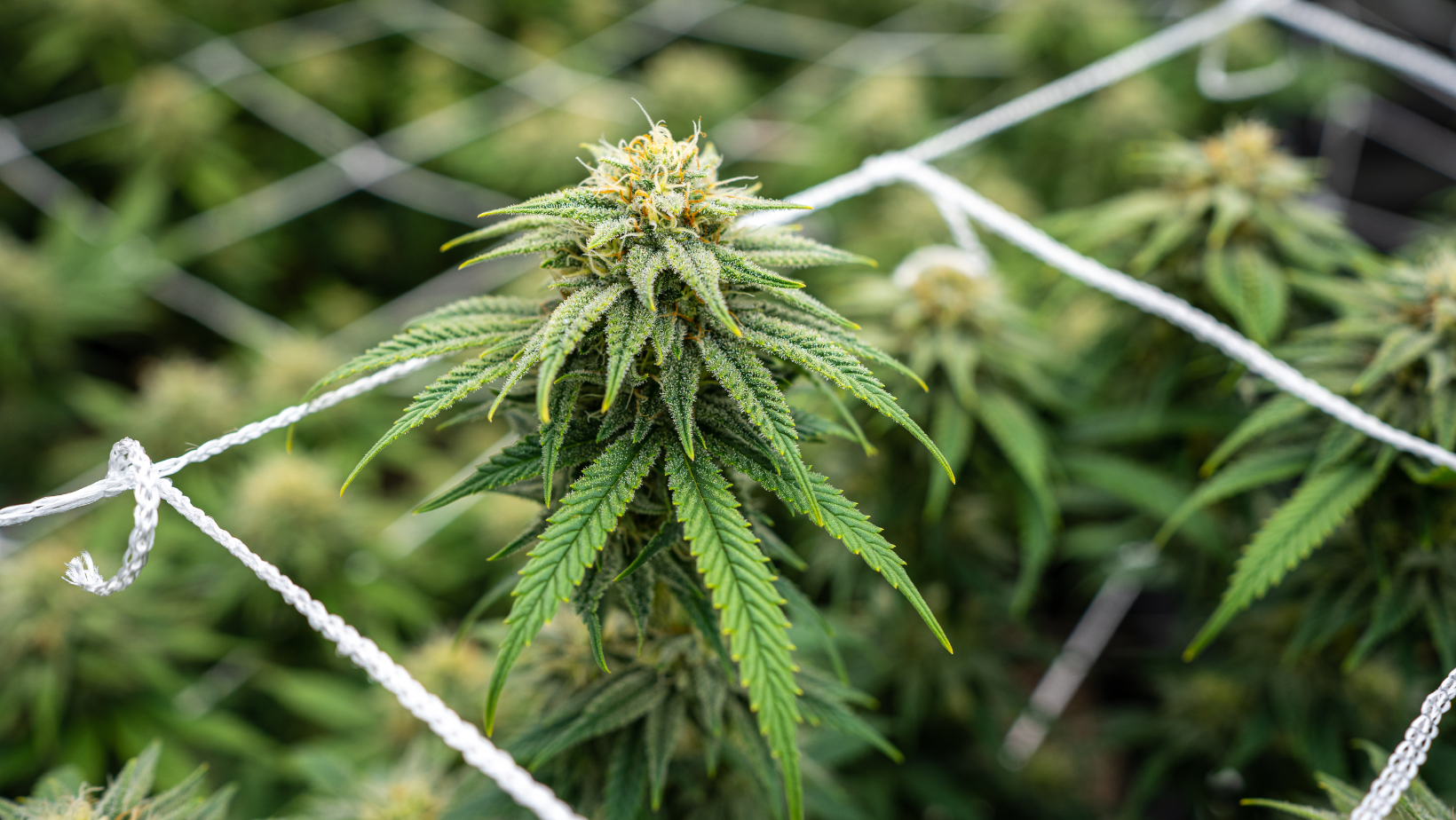
The cannabis flower, commonly referred to as the bud, is the epicenter of attention and value during the plant’s flowering stage. This intricate structure is composed of several parts, each playing a critical role.
The pistils, identifiable by their often vibrant, hair-like strands, are essential for the plant’s reproductive process. Sugar leaves, small and coated with resin, peek out from the growing cannabis buds, carrying a modest amount of cannabinoids and terpenes, contributing to the flower’s overall potency and aroma.
The most significant component of the flower is the trichomes. These tiny, crystal-like structures on the surface of the buds and leaves are the plant’s powerhouse for producing cannabinoids, such as THC and CBD, and aromatic compounds known as terpenes.
The density, size, and quality of these trichomes are often indicative of the flower’s potency and therapeutic value, making them a key focus for both growers and consumers seeking high-quality cannabis.
Cannabis Growth Timeline
-
Germination (1-2 weeks): Seeds sprout and develop root systems.
-
Seedling Stage (2-3 weeks): The first set of true leaves develop.
-
Vegetative Stage (3-8 weeks): Rapid growth in size and foliage.
-
Pre-flowering Stage (1-2 weeks): The plant begins to show sex (male or female).
-
Flowering Stage (6-8 weeks for indicas, 8-12 weeks for sativas): Buds develop and mature.
-
Harvesting: Timing depends on strain and desired effects; trichomes are observed for maturity.
-
Drying and Curing (2-4 weeks): Post-harvest processing for optimal quality.

Cannabis Flowering Stage
Week One: Transition and Stretch
As cannabis plants enter Week One of the flowering stage, they begin a critical transition known as “the stretch,” marked by significant changes in growth and development.
This phase is pivotal for setting the stage for bud formation and involves several key changes:
-
Height Increase: Plants may double in height as they prepare for the flowering cycle.
-
Light Cycle Shift: Indoor growers typically change to a 12/12 light cycle to trigger flowering.
-
Nutrient Shift: Increased need for phosphorus and potassium, with a reduced requirement for nitrogen.
-
Water Uptake: The plant’s demand for water rises due to rapid growth.
-
Energy Reallocation: Resources are redirected from vegetative growth to flowering.
-
Pre-Flower Development: Small pre-flowers start emerging, signaling the start of the flowering phase.
-
Increased Stress Sensitivity: Plants become more susceptible to environmental stress and require careful monitoring.

Week Two: Budlet Formation
In Week Two of the cannabis flowering stage, known as the Budlet Formation phase, the plants begin to show early signs of their future bounty.
This stage is marked by the emergence of tiny pistils, delicate hair-like structures, at the nodes where leaves and branches meet. These pistils are the precursors to buds and play a crucial role in the plant’s reproductive process.
The initial formation of budlets occurs, setting the foundation for the full development of cannabis flowers. During this period, the plant continues its rapid growth, but the focus shifts more towards these reproductive structures.
The appearance of these early budlets is a critical indicator of healthy plant development and signals the start of the more intricate and demanding part of the flowering process.
For growers, this phase requires careful monitoring of environmental conditions and nutrient levels to support the burgeoning growth.
Week Three and Four: Bud Development
During weeks three and four of bud development:
- Buds grow rapidly in size as the plant focuses energy on flowering.
- Trichomes, which produce cannabinoids, start to proliferate on the buds.
- The aroma of the plant intensifies due to increased terpene production.
- The plant may need more phosphorus and potassium to support flowering.
- It’s important to monitor for pests and diseases, especially with denser buds.
- Adjustments in lighting, temperature, and humidity might be necessary.
- Consistent watering is crucial to avoid over or under-watering.
- Changes in the color of the pistils can indicate the progress of bud development.
Related Article: How to properly water your marijuana plants.
Week Five to Seven: Buds Ripen
During weeks five to seven, the buds enter their ripening phase, a critical period in the growth cycle. During this stage, the buds become denser and more substantial, often referred to as “fattening.”
This increase in size and density is a sign of the buds maturing and nearing harvest readiness. There are noticeable changes in the color of the pistils and trichomes.
The pistils may change from white to orange or brown, indicating maturity, while the trichomes transition from clear to a milky or amber hue.
These color changes are key indicators of peak cannabinoid production, signaling the ideal time for harvest to maximize potency and flavor.

Week Eight and Beyond: Harvest Preparation
As the female cannabis plant enters week eight and beyond, it typically approaches the harvest stage for many strains. This period is marked by clear signs of readiness for harvesting.
The most notable indicators include significant changes in the color and texture of the pistils and trichomes.
The pistils, which may have been white or vibrant in earlier stages, often darken to hues of orange, red, or brown. Similarly, the trichomes – initially clear – become milky or amber in color.
These changes are not just visual, they reflect the peak maturity of the plant, with optimal levels of cannabinoids and terpenes.
Monitoring these signs closely ensures the harvest is timed perfectly to capture the plant’s full potential in terms of potency, aroma, and flavor.
Tips And Tricks For The Cannabis Flowering Stages
Here’s a table outlining various tips and tricks for the cannabis flowering stages:
| Stage | Tips and Tricks |
|---|---|
| Weeks 1-2 | Increase phosphorus and potassium intake. Ensure adequate spacing for airflow. Begin a 12/12 light cycle to induce flowering. |
| Weeks 3-4 (Bud Development) | Monitor humidity to avoid mold. Prune lower leaves to focus energy on bud growth. Adjust lighting to avoid light burn. |
| Weeks 5-7 (Buds Ripen) | Reduce nitrogen intake, focus on phosphorus and potassium. Check trichome color for harvest timing. Maintain stable environment to avoid stress. |
| Week 8+ (Harvest Preparation) | Flush the soil to remove excess nutrients. Gradually reduce light intensity. Prepare for harvest when trichomes are mostly milky or amber. |
These tips are designed to optimize each stage of the flowering process, from the initial transition to flowering right through to the final preparations for harvest. Adjustments in nutrition, lighting, and environmental conditions are key to maximizing yield and potency.
Auto-Flowering Strains
For beginners, auto-flowering strains can be a simpler option as they do not require light cycle adjustments.
Here’s a list of 10 auto-flowering strains you should check out:
- Northern Lights Auto
- Blue Dream Auto
- Amnesia Haze Auto
- Gorilla Glue Auto
- Girl Scout Cookies Auto
- Sour Diesel Auto
- Zkittlez Auto
- White Widow Auto
- Green Crack Auto
- Jack Herer Auto

Pro Tips For A Better Harvest
Successful cultivation requires attention to detail and adherence to best practices.
Here are some tips to ensure a bountiful and quality harvest:
-
Sexing your plants
-
Fix problems before flowering
-
Smooth transition to flowering
-
Optimal lighting
-
Avoid transplanting close to the bottom
-
Trim excess foliage
-
Humidity and temperature control
-
Avoid nutrient and light burn
Sexing Your Plants
Sexing cannabis plants early in the flowering stage is essential to maintain bud quality. Female plants produce buds, while males produce pollen sacs.
To avoid pollination, which leads to seeded and less potent buds, growers must identify and remove male plants. This is done by looking for pistils (indicative of females) and pollen sacs (indicative of males) on young plants.
Early identification and separation of males ensure a higher quality, seedless harvest.
Fix Problems Before Flowering
-
Check Plant Health: Ensure plants are free from pests, diseases, and nutrient deficiencies.
-
Optimize Nutrition: Balance nitrogen, phosphorus, and potassium levels suitable for the vegetative stage.
-
Stable Environment: Maintain consistent lighting, temperature, and humidity levels.
-
Pruning: Remove dead or yellowing leaves, and consider pruning to shape plant growth.
-
Root Health: Ensure roots are healthy and not bound or showing signs of rot.
-
Training Techniques: Apply low-stress training (LST) or high-stress training (HST) methods to improve light exposure.
-
pH Levels: Regularly check and adjust the pH level of the soil or hydroponic solution.
-
Hydration: Ensure plants are neither overwatered nor underwatered.
Related Article: The ultimate guide to cannabis pests.

Smooth Transition to Flowering
For a smooth transition to the flowering stage in cannabis cultivation, switch the light cycle to 12 hours of light and 12 hours of darkness.
Adjust nutrients, reducing nitrogen and increasing phosphorus and potassium. Lower temperatures to 65-80°F (18-26°C) and maintain humidity around 40-50%.
Monitor watering, ensure proper pH levels, and regularly check for pests and diseases. Keep a close eye on plant health for any stress signs, ensuring a stable environment for bud development.
Optimal Lighting
Optimal lighting is crucial for cannabis plants during the flowering stage. Lights that emit red and orange wavelengths are ideal for this phase, as they closely mimic the natural light spectrum of the autumn sun.
These wavelengths encourage bud ripening and development, leading to denser, more potent flowers. Many growers use High-Pressure Sodium (HPS) lights, known for their red-orange spectrum, to achieve this effect.
Full-spectrum LED lights can be adjusted to emphasize these wavelengths. Proper lighting not only accelerates bud growth but also enhances the overall quality of the yield by promoting robust cannabinoid and terpene profiles in the buds.
Avoid Transplanting Close to Bloom
-
Transplanting close to the flowering stage can shock cannabis plants.
-
Complete any transplanting well before the onset of the bloom phase.
-
Early transplanting allows plants to recover and establish in their new environment.
-
Ensures roots are well-established for the demanding flowering stage.
-
Stable roots and minimized stress lead to healthier bloom and bud development.
Trim Excess Foliage
| Trimming Step | Description |
|---|---|
| Identify Excess Foliage | Look for large leaves that are shading bud sites or underdeveloped, yellowing leaves. |
| Prune Gradually | Remove a few leaves at a time over several days to avoid shocking the plant. |
| Focus on Lower Leaves | Start with leaves at the bottom as they are less likely to receive adequate light. |
| Use Clean Tools | Ensure scissors or pruners are sterilized to prevent infection. |
| Trim During Vegetative Stage | Do heavier pruning during the vegetative stage, reducing it as flowering progresses. |
| Avoid Over-Pruning | Be cautious not to remove too many leaves, which can stress the plant and reduce photosynthesis. |
| Post-Trimming Care | After pruning, monitor plants closely for signs of stress and adjust care as necessary. |
Steps on how to prune your plant properly.
Related Article: How to properly prune your cannabis plants.

Humidity and Temperature Control
Controlling humidity and temperature is vital for healthy cannabis growth, particularly during the flowering stage.
Ideal humidity levels should gradually decrease from around 65% in the vegetative stage to 40-50% in flowering to prevent bud rot and mold.
Temperature also plays a crucial role. Maintaining daytime temperatures between 70-80°F (21-27°C) and slightly cooler at night is beneficial. This mimics natural conditions and promotes robust growth. Excessive humidity or temperature variations can stress the plants, leading to poor bud development or increased susceptibility to pests and diseases.
A stable environment with controlled humidity and temperature is key to cultivating high-quality cannabis.
To learn more about the proper temperature and humidity for your cannabis plants, read this article.
Avoid Nutrient and Light Burn
Avoiding nutrient and light burn is essential in cannabis cultivation. Overfeeding plants with nutrients can lead to nutrient burn, characterized by yellowing or burnt tips on leaves.
It’s important to adhere to a strict feeding schedule, tailored to the plant’s growth stage, and to gradually introduce any changes in nutrient composition.
Excessive light intensity or proximity can cause light burn, which can bleach the tops of the plants and impair growth.
Ensure that lights are positioned at an appropriate distance, depending on the type of lighting used, and adjust as the plants grow.
Regular monitoring and adjustments based on plant response are key to maintaining a balanced environment that supports healthy growth and prevents damage from nutrient or light stress.

Support Heavy Buds
Supporting heavy buds in cannabis cultivation is crucial for several reasons. As the buds mature, they significantly increase in weight, which can put a strain on the plant’s branches.
Without proper support, these branches may break or bend, potentially damaging the plant and reducing the overall yield. Using supports like bamboo stakes, trellises, or even soft plant ties helps distribute the weight of the buds more evenly.
This not only prevents physical damage to the plant but also ensures that the buds receive adequate airflow and light exposure, which are essential for healthy growth and development.
Well-supported plants are less likely to suffer from issues like mold or pests, which can thrive in densely packed, damp areas. Proper support ultimately leads to healthier plants and a more abundant, high-quality harvest.
Best Practices During Flowing Stage
-
Feeding
-
Lighting
-
Fans
Feeding
-
Increase Phosphorus and Potassium: Boost levels of these nutrients to support flower growth.
-
Reduce Nitrogen: Gradually decrease nitrogen as it’s less needed in flowering.
-
Maintain pH Balance: Keep soil or nutrient solution pH around 6.0 to 6.5.
-
Follow a Feeding Schedule: Stick to a consistent feeding schedule to avoid over or underfeeding.
-
Monitor Plant Response: Adjust nutrient levels based on the plant’s appearance and growth.
-
Use Bloom Boosters: Consider adding bloom booster supplements for enhanced flower development.
-
Avoid Overfeeding: Be cautious with nutrient concentrations to prevent nutrient burn.
-
Flush Before Harvest: Stop feeding and flush plants with plain water 1-2 weeks before harvesting to improve taste and quality.
Lighting
In the marijuana flowering stage, lighting is crucial for cannabis growth. High-Pressure Sodium (HPS) lights, known for their red-orange spectrum, are commonly used, as are adjustable full-spectrum LED lights.
The ideal distance from the plants is about 12-18 inches for HPS and 12-16 inches for LEDs, depending on wattage and heat output.
Aim for approximately 50-75 watts per square foot of grow space. Proper light positioning and wattage ensure adequate energy for flowering while preventing heat stress or light burn.
Related Article: The marijuana light cycle

Fans
-
Position fans to ensure a gentle breeze reaches all parts of the cannabis plant, strengthening stems and promoting growth.
-
Avoid pointing fans directly at plants to prevent stress and damage to flowers.
-
Use fans for temperature regulation, keeping the grow room within the optimal range for flowering.
-
Manage humidity with fans to reduce the risk of mold and mildew, particularly around dense buds.
-
Ensure even distribution of CO₂ for effective photosynthesis.
-
Help dissipate heat from grow lights to prevent light burn.
-
Run fans continuously, both during light and dark periods, to maintain a stable environment.
Key Takeaways:
- The anatomy of cannabis plants, including stalks and fan leaves, plays a crucial role in the health and development of flowering buds.
- Cannabis plants undergo distinct growth stages, with the flowering phase being pivotal for bud production.
- Each week of the flowering stage presents unique characteristics and requirements for optimal bud development.
- Effective care during flowering, such as proper lighting, feeding, and environmental control, is essential for quality yield.
- Auto-flowering cannabis strains offer a simpler cultivation process, ideal for beginners.
- Advanced cultivation techniques, including identifying cannabis plant sex and supporting heavy buds, are vital for maximizing harvest quality.

Conclusion
This guide on the cannabis flowering stage offers essential insights for growers at all levels. It details the plant’s anatomy, the critical growth phases during flowering, and the necessary care techniques for each stage.
Highlighting the importance of proper lighting, nutrition, and environmental control, the guide also introduces auto-flowering strains for beginners and advanced cultivation tips for maximizing yield and quality.
This comprehensive resource is invaluable for anyone looking to optimize their cannabis cultivation during the flowering phase.
Engage With Us
What are your personal experiences or challenges with the cannabis flowering stage, and do you have any additional tips or strategies that have worked well for you?
Share your stories and insights in the comments below to help fellow growers!

- Drying and Curing Done Right – November 6, 2025
- How Cannatrol Is Revolutionizing the Cure, One Grow at a Time – July 17, 2025
- Meet Evergreen Pod: The Reusable Solution Changing Cannabis Storage Forever – June 3, 2025


Leave a Reply