Last Updated on January 9, 2024 by Alex Roig
Gardening with kids is a delightful journey filled with learning, growth, and fun. Getting kids involved in gardening at an early age is crucial to sow the seeds of interest, appreciation for this rewarding activity, and give your kids a green thumb.
This guide dives into the world of gardening alongside children, offering insights, great tips, and creative ideas for a joyful and educational experience.
Key Takeaways:
- Learning Through Play: Gardening is both fun and educational, teaching kids about nature and science.
- Overall Development: It aids in sensory, dietary, and emotional development.
- Eco Awareness: Kids learn about environmental care and sustainability.
- Creativity: Themed gardens and activities enhance creativity.
- Seasonal Activities: Gardening offers year-round learning opportunities.
- Tech Integration: Modern gardening includes technology use, appealing to tech-savvy children.

Why Gardening with Kids is Important
Gardening with kids is an incredibly beneficial activity that goes beyond just playing in the dirt. It is a hands-on experience that offers a multitude of benefits, fostering a range of skills and knowledge.
When children engage in gardening, they not only learn about the science of plants, soil, and the environment, but they also develop valuable life skills.
Here are some key reasons why gardening with kids is important:
- Teaches about plant biology and the environment.
- Encourages eating home-grown fruits and vegetables.
- Cultivates a sense of care and nurturing.
- Provides a fun way to engage in outdoor exercise.
- Develops dexterity through planting and tending.
- Fosters an understanding of growth and change.
- Raises consciousness about sustainable living.
The Magic of Gardening with Little Hands
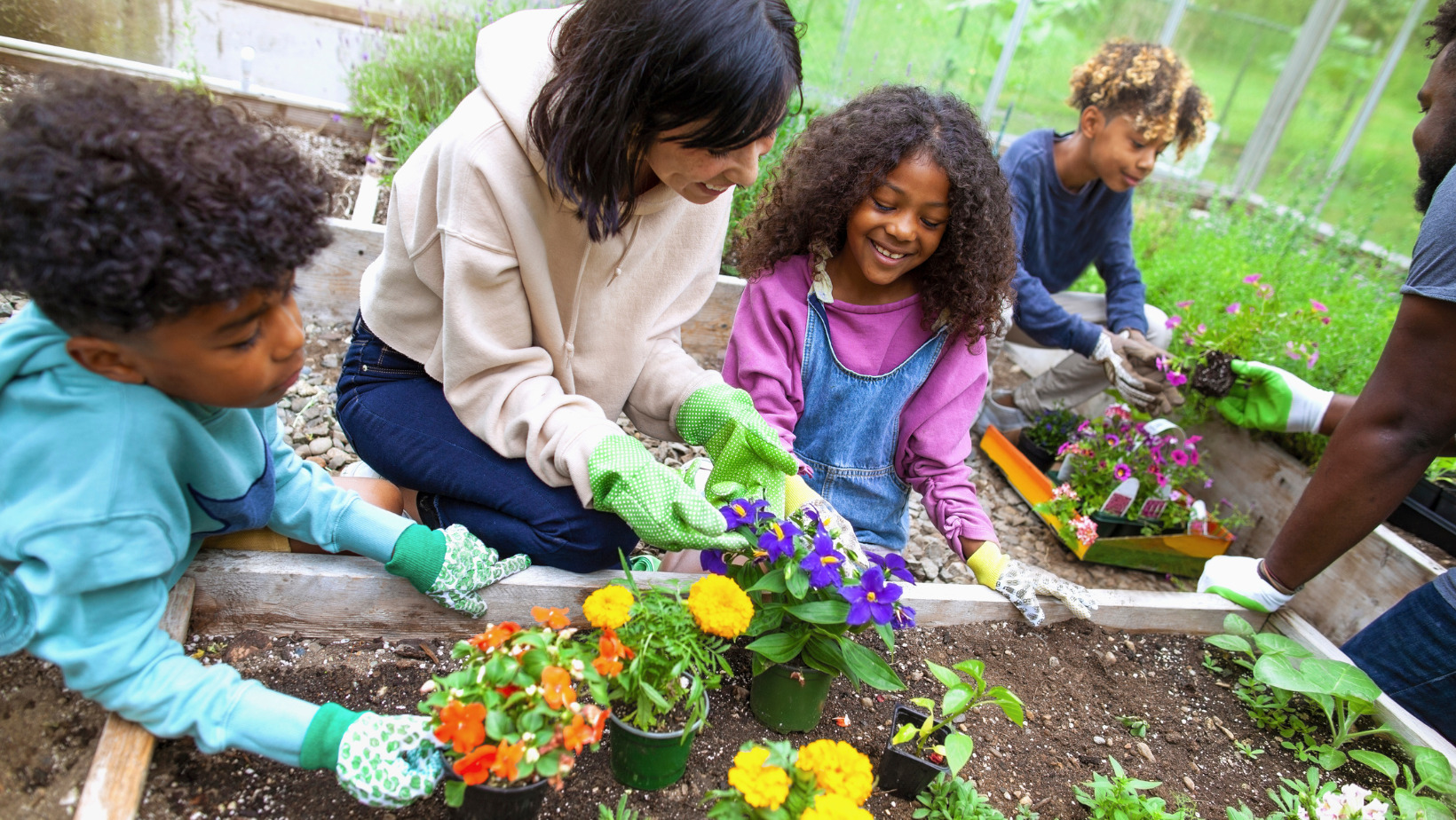
Getting your kids involved with gardening is an enchanting adventure. Pick a spot that’s safe and reachable for them, like a cozy backyard nook or a sunny windowsill.
Make sure it’s at their level, sparking their interest. This isn’t just about growing plants, it’s a chance to show them the beauty of nature and teach them life lessons through gardening.
Imagine the fun of getting your hands dirty together and watching both the garden and your kids love for nature blossom!
Let’s dive into this journey with excitement and see where it takes us and our little gardeners.
Related Article: Health benefits of gardening
Engaging Young Minds with Themed Gardens
Create unique themed gardens like:
- Storybook Gardens: Bring favorite tales to life with plants related to children’s books.
- Sensory Gardens: Stimulate senses with plants of various textures, scents, and colors.
- Pizza Garden: Grow pizza toppings like tomatoes and basil.
- Butterfly Gardens: Plant butterfly-friendly flowers like lavender.
- Rainbow Gardens: Use colorful plants for a natural rainbow.
- Time Travel Gardens: Feature the best plants from different historical periods.
These themes turn gardening into a fun, educational activity for kids.

Soil and Compost: The Foundation of Gardening
Learning about soil and compost is a fundamental aspect of gardening that offers kids a hands-on education in environmental science and biology.
By exploring the composition and importance of these elements, children gain valuable insights into the natural world, understanding how nurturing the earth contributes to the growth and health of plants.
The Science of Soil
Exploring the science of soil is an enriching experience for kids, opening their eyes to the intricate world beneath our feet.
Teaching children about different types of soil – sandy, clay, and loam – helps them understand how each type affects plant growth.
Composting, a vital part of this educational journey, reveals the process of turning organic waste into nutrient-rich soil, illustrating the cycle of life and decay in nature.
As kids learn how these elements support plant life, they also grasp the importance of soil health and sustainability.
This knowledge not only cultivates their gardening skills but also instills a deeper respect for the environment and the role they can play in preserving it.
“To plant a garden is to dream of tomorrow.”
Audrey Hepburn
Fun with Composting
Making composting fun for kids can turn an educational activity into an enjoyable and memorable experience.
Here are some ways to make composting exciting:
- Decorate compost bins with bright colors or stickers.
- Hunt for worms and critters in the compost.
- Find and sort kitchen scraps for composting.
- Track plant growth using compost.
- Keep a diary of compost changes over time.
- Add fragrant items like citrus peels to the compost.
- Create art with compost elements like leaves or seeds.
Related Article: Learn more about urban composting.
Plants that Captivate Young Gardeners
To captivate young gardeners, it’s essential to choose plants that not only thrive with minimal care but also hold a child’s interest through their unique characteristics, vibrant colors, or interactive nature.
Plants like sunflowers, which tower above them, or snapdragons, which are fun to play with, can spark a lifelong love for gardening in children.
These plants should be easy to grow, fast to sprout, and visually appealing to keep the young children excited and engaged in gardening.
Here are nine plants that fit this description:
- Sunflowers
- Snapdragons
- Cherry Tomatoes
- Marigolds
- Pumpkins
- Lavender
- Nasturtiums
- Radishes
- Peas

Interactive Gardening Activities
Interactive gardening activities offer a dynamic way for children to engage with the natural world, blending education with hands-on fun.
These fun activities not only teach kids about the basics of plant biology and ecology, but also encourage creativity, responsibility, and an appreciation for the environment.
Art in the Garden
Blending art with gardening transforms the garden into a creative playground. Making plant labels or garden decorations not only beautifies the space but also makes it more engaging and educational.
This approach encourages artistic expression and a deeper appreciation for the garden’s diversity, turning every plant and corner into a unique artistic expression.
Transform old rain boots into playful planters, perfect for adding a splash of color to your garden. They’re great for planting flowers or even seed potatoes.
Math Meets Nature
Integrating math into gardening activities is an excellent way to make learning both fun and practical.
Through tasks like measuring plant growth, counting seeds, or calculating the area for planting flowers, children can apply mathematical concepts in a natural setting.
This hands-on approach helps in understanding and appreciating math in everyday life, reinforcing skills like observation, measurement, and calculation.
By seeing how numbers and measurements directly relate to the growth and health of their plants, kids can gain a more tangible and engaging experience with math, seeing its relevance and application beyond the classroom.
Advanced Garden Projects for Older Kids
As children grow, they can handle more sophisticated gardening projects that challenge their skills and deepen their understanding of the natural world.
These advanced projects not only foster their curiosity but also enhance their problem-solving skills and connection with nature.
Here are seven advanced gardening projects for older kids:
- Butterfly Garden: Design a habitat for butterflies.
- Vegetable Plot: Manage a personal vegetable garden.
- Hydroponics: Build and maintain a hydroponics system.
- Weather Monitoring: Operate a mini weather station.
- Plant Breeding: Experiment with cross-pollination.
- Garden Photography: Document garden growth and changes.
- Compost System: Construct and manage a compost pile.
Experimenting with Plant Science
- Explore the effects of different environmental conditions on plant growth.
- Introduce basic genetics by cross-breeding flowers or vegetables.
- Explore the effects of different environmental conditions on plant growth.
- Introduce basic genetics by cross-breeding flowers or vegetables.
- Test soil pH to understand its impact on plant health.
- Practice plant propagation through cuttings or seeds.
- Observe how plants respond to light and gravity.
- Track how plants adapt to changes in sunlight or watering over a few weeks, providing practical insights into plant biology.

Sustainable Gardening Practices
Sustainable gardening practices teach children valuable lessons in environmental awareness.
Through activities like rainwater harvesting, they learn about conserving resources, while discussions on biodiversity and native planting highlight the importance of maintaining ecological balance.
These practices not only enhance their gardening skills but also instill a deeper understanding of and respect for nature.
Follow this link to learn more about sustainable gardening practices.
Gardening Through the Seasons
Gardening is a year-round adventure, with each season bringing its own set of tasks and joys.
In spring, children can experience the excitement of planting a tiny seed and witnessing the first sprouts, while summer offers the joy of tending to growing plants and perhaps even harvesting.
As autumn arrives, spend time preparing the garden for colder weather, and in winter, planning for the next year’s garden provides a continual learning experience.
This cycle not only teaches kids about the changing seasons but also about patience and the rewards of long-term care.
Spring: Awakening the Garden
- Start seeds indoors and prepare your garden bed for early planting.
- Discuss the role of pollinators and start a bee-friendly garden.
- Try planting diverse vegetables to explore different plant needs.
- Teach soil enrichment with compost for garden health.
Read this article to learn more about building a pollinator garden.
Summer: Peak Gardening Season
- Focus on maintenance like watering, weeding, and pest control.
- Harvest vegetables and fruits and use them in cooking with kids.
- Observe and discuss plant responses to summer conditions.
- Keep a garden journal or photo log for observation skills.
Autumn: Preparing for Rest
- Plant bulbs for spring and harvest late crops.
- Teach about the decomposition process by mulching and composting fallen leaves.
- Collect and save seeds for next year’s planting.
- Winterize the garden by covering raised beds to protect them from frost.
Winter: Planning and Dreaming
- Plan next year’s garden and start a gardening journal.
- Engage in indoor gardening projects like growing herbs or sprouting seeds.
- Research and learn about different plant species and their growing conditions.
- Create DIY garden markers and plan the garden layout.
Gardening and Technology
Integrating technology into gardening can greatly excite and educate kids, blending the natural world with digital advancements.
Apps for plant identification and growth tracking, along with smart tools like soil moisture sensors, offer an interactive way to learn about botany and environmental conditions.
This modern approach to gardening engages the tech-savvy younger generation, providing a practical and fun way to understand how technology and nature can work together.
It’s an innovative method to combine learning and technology in a natural setting.
Here are some devices and apps that can make gardening kids gardening more exciting:
- PlantSnap: Plant identification app
- Gardenize: Garden tracking and journaling app
- FlowerChecker: Plant identification service
- MySoil: Soil health and composition testing app
- Sun Seeker: Sun tracking app for optimal plant placement
- GrowIt!: Social gardening app to share and discover plants
- Smart Plant Home: Plant care advice and identification app
- Parrot Flower Power: Wireless plant monitoring sensor
- GreenIQ: Smart Garden hub for irrigation control

Conclusion
Gardening with kids is not just a pastime. It’s a rich, educational journey that cultivates a deep connection with nature, instills valuable life skills, and ignites a sense of wonder and curiosity.
From the hands-on learning of plant biology and ecology to the development of sensory awareness and emotional well-being, gardening offers a comprehensive growth experience.
It’s a way to bond with nature, each other and build self-esteem, fostering a lifetime of environmental stewardship and healthy living habits.
Engage with Us
So, let’s grab our gardening tools and embark on this green adventure with our little ones. What’s been your favorite gardening moment with your children?
Share your experiences and tips in the comments below to inspire and learn from our community of budding gardeners!

- Drying and Curing Done Right – November 6, 2025
- How Cannatrol Is Revolutionizing the Cure, One Grow at a Time – July 17, 2025
- Meet Evergreen Pod: The Reusable Solution Changing Cannabis Storage Forever – June 3, 2025


Leave a Reply