Last Updated on February 5, 2024 by Alex Roig
How does compost work? It’s a natural recycling process where organic waste decomposes into nutrient-rich soil, thanks to the work of microorganisms and worms.
This simple yet effective method turns kitchen scraps and yard debris into valuable compost, enhancing soil health and reducing landfill waste.
In this article, we will dive into the world of composting, covering everything from the basics of how compost works and how to start your own pile, to exploring advanced composting techniques and solving common problems, all aimed at helping you transform organic waste into valuable, nutrient-rich compost for your garden.
Key Takeaways
- Composting transforms organic waste into nutrient-rich soil, benefiting gardens and reducing landfill use.
- Decomposition is driven by bacteria and fungi, breaking down organic material and heating up the compost pile.
- A balance of green and brown materials is essential, aiming for a carbon to nitrogen ratio of about 30:1 for optimal decomposition.
- Regular maintenance, including moisture control and aeration, ensures efficient composting and prevents common problems.
- Solving issues like odors and pests involves adjusting moisture and aeration, and adding the right mix of materials.
- Advanced composting methods like vermicomposting and Bokashi offer efficient ways to recycle a broader range of waste and improve soil health.

Understanding Composting: The Basics
Composting is a natural process that recycles organic material like leaves, fruit and vegetable scraps, and paper products into a valuable soil amendment known as compost.
At its core, composting is about managing the decomposition of organic matter to create a product that benefits the soil and, by extension, plants.
The magic of compost lies in its ability to improve soil structure, provide essential nutrients to plants, and even help combat soil diseases.
What Happens at the Microscopic Level?
Composting is not just piling up yard waste and waiting for it to rot. It’s a carefully managed process involving billions of microorganisms that consume and break down organic matter into simpler substances.
These microorganisms include bacteria, fungi, and actinomycetes, each playing a unique role in the decomposition process.
Bacteria are the most numerous and effective composters, thriving in a moist, oxygen-rich environment. They start the process by breaking down the easy-to-digest materials, generating heat, which raises the compost pile’s temperature.
Fungi and actinomycetes take over later, dealing with the more complex materials like fibrous plant stems and woody materials.
The Importance of Nitrogen and Carbon
A successful compost pile needs a balanced diet of nitrogen and carbon rich material. Nitrogen comes from green materials like food waste and fresh grass clippings, serving as the protein source for microorganisms.
Carbon, on the other hand, comes from brown materials like dried leaves and branches, providing energy for the microbes.
A common recommendation is to maintain a carbon to nitrogen ratio (C:N) of about 30:1 for optimal composting conditions.

Setting Up Your Compost Pile
Starting your compost pile correctly is key to a smooth composting journey. A proper setup promotes faster decomposition, reduces pests and odors, and ensures your compost turns into nutrient-rich soil efficiently, laying a solid foundation for a thriving garden.
Selecting the Right Spot and Container
Choosing a suitable location for your own compost bin can significantly affect the backyard composting process.
It should be easily accessible, close to a water source, and in a spot that receives partial sunlight to help maintain the right temperature. Don’t put your compost pile on the farthest spot on your property. You’re less likely to use it if it takes you a long time to get to there.
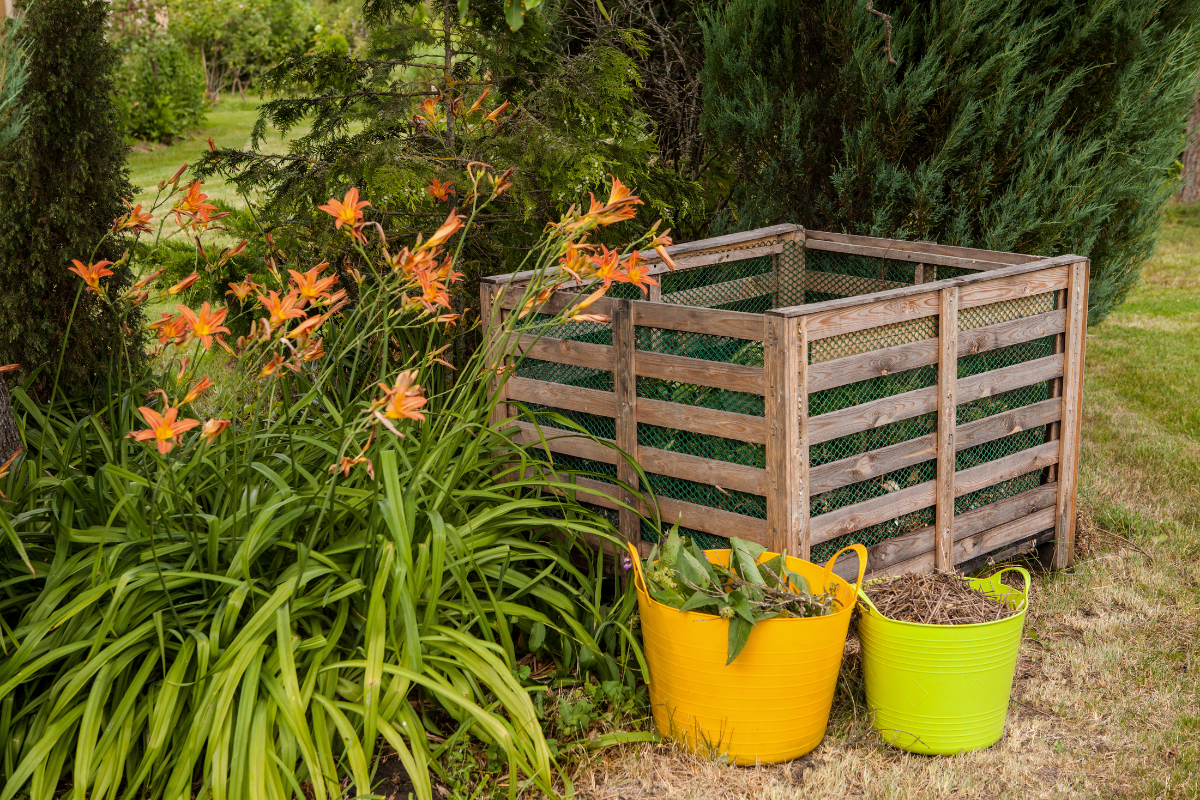
Your compost pile can range from simple open piles to more sophisticated compost bins that help retain heat and moisture.
“Producing quality compost is the most important job on the organic farm. A lot of the problems I see on farms I visit could be solved by making better compost.”
Elliot Coleman
How to Build a Compost Pile
To start your compost pile, alternate layers of green and brown materials, ensuring proper moisture and aeration.
Here’s a simplified guide:
- Begin with a layer of coarse brown material, like small branches, to enhance airflow at the bottom.
- Add a layer of green material, followed by a layer of brown material.
- Sprinkle water to moisten the layers without making them soggy.
- Continue layering until your pile or bin is full, turning it every few weeks to introduce oxygen and speed up the decomposition.
Related Article: How to compost your household waste.
Compost Maintenance: Moisture, Aeration, and Temperature
Proper maintenance of moisture, aeration, and temperature in your compost pile is essential for efficient decomposition. It encourages microbial activity, prevents bad smells, and ensures the pile heats up enough to break down materials quickly and safely, resulting in high-quality compost for your garden.
Moisture and Aeration: Keeping the Balance
The compost pile should be as moist as a wrung-out sponge to provide the ideal environment for microorganisms. If it’s too dry, the decomposition will slow down; if too wet, it can become smelly and anaerobic.
Turning the pile regularly introduces air, preventing compaction and ensuring that all compost materials break down evenly.
Maintaining the right moisture and aeration in your compost pile is essential. Adjust moisture by watering in dry conditions or covering the pile in wet weather.
Regularly turn the pile to ensure even air circulation and moisture distribution, preventing clumps and ensuring efficient decomposition.
This balance might require adjustments based on weather conditions, but it’s crucial for a healthy, odor-free compost process.

Temperature: The Heat of the Action
Maintaining an optimal temperature within your compost pile is a crucial aspect of successful composting.
As the microorganisms within the pile break down material, they generate heat, which not only speeds up the decomposition process but also plays a vital role in sanitizing the compost by killing weed seeds and harmful pathogens.
Monitoring and managing the temperature ensures your compost develops efficiently and is safe to use in your garden.
Here’s how temperature affects your compost pile:
- The breakdown of material raises the pile’s temperature to 140°F – 160°F.
- High temperatures quicken decomposition, converting waste into compost faster.
- This heat eliminates weed seeds and harmful pathogens.
- Regular checks of the pile’s temperature help manage its readiness and when to turn it.
- Ideal temperature ranges are crucial; too low slows decomposition, too high can kill beneficial microbes.
- Turning the pile ensures even heat distribution and prevents overheating.
- In colder climates, insulating your pile helps maintain necessary warmth.
- Turning also improves aeration, aiding the composting process.
Optimal Conditions for Composting:
| Factor | Ideal Range |
|---|---|
| Moisture | Like a wrung-out sponge |
| Temperature | 140°F to 160°F in the core |
| C:N Ratio | 30:1 |
| Aeration | Turn every 2-4 weeks |
Composting Challenges and Solutions
Even with the best intentions, you might encounter issues like odors, pests, or slow decomposition.
Here are some troubleshooting tips:
- Odors: Usually, a sign of too much moisture or not enough air. Turn the pile more frequently and add brown materials to absorb excess moisture.
- Pests: Secure your compost bin with a lid or hardware cloth to deter animals. Avoid adding meat, dairy, or oily food waste to your compost.
- Slow Decomposition: This can be caused by a lack of nitrogen, moisture, or aeration. Add more green materials, moisten the pile, or turn it more frequently to introduce air.
- Temperature Too Low: If the pile isn’t heating up, it might lack green materials. Increase the amount of nitrogen-rich greens to boost microbial activity and heat.
- Unpleasant Acidity: A sour smell indicates acidity, which can slow decomposition. Add calcium-rich materials like crushed eggshells to neutralize the pH and restore balance.
Benefits of Composting
Composting material offers numerous benefits beyond creating rich soil for gardening. It reduces the amount of waste sent to landfills, thereby lowering greenhouse gas emissions.
Compost improves soil structure, moisture retention, and disease resistance, making plants healthier and more robust. It’s a rewarding way to contribute to a sustainable environment by recycling kitchen and yard waste into something valuable.
Composting supports biodiversity by providing a habitat for beneficial insects and microorganisms that play essential roles in nutrient cycling and plant health.
It also helps in reducing reliance on chemical fertilizers, promoting a more organic and sustainable approach to gardening and farming.
This holistic benefit enhances not just the immediate environment of your garden but contributes to broader ecological health and sustainability.
Read this article to learn more about building healthy soil.

What to do With Your Finished Compost
Once your compost has transformed into that dark, crumbly gold, it’s time to put it to good use and watch your garden thrive.
Sprinkle it around your plants as a top dressing to nourish them, mix it into your garden beds to enrich the soil, or use it as a potent ingredient in your potting mix for containers and hanging baskets.
Not only will you see the difference in the health and vigor of your plants, but you’ll also feel a deep sense of accomplishment knowing you’ve closed the loop in your own little ecosystem by recycling waste into treasure.
There’s something incredibly satisfying about feeding your garden with compost you’ve made yourself—it’s like giving a gift to both your plants and the planet.
Advanced Composting Techniques
As you become more familiar with basic composting principles, you might want to explore advanced techniques that can make your composting efforts even more effective and efficient.
Hot Composting vs. Cold Composting
- Hot composting: This is a more active method that requires managing the balance of green and brown materials carefully, maintaining moisture, and regularly turning the pile to maintain high temperatures. This method can produce finished compost in as little as a few months but requires more effort.
- Cold composting: This is less labor-intensive but takes longer, often up to a year or more. You simply add organic materials to your pile or bin as they become available, without worrying about turning the pile or maintaining a specific temperature.

Vermicomposting: The Role of Earthworms
Worm composting introduces red wiggler worms into the composting process, where they consume and break down organic material, producing worm castings, a highly nutrient-rich form of compost.
This method is excellent for indoor composting and can be faster and less odorous than traditional composting methods.
Vermicomposting also allows you to brew compost tea, a nutrient-packed liquid fertilizer made by steeping worm castings in water. This tea enriches plants with beneficial microbes and nutrients, offering a quick, absorbable boost.
You can apply it directly to the soil or as a foliar spray, maximizing your compost’s benefits and promoting vibrant plant growth with this easy-to-make, sustainable resource.
Related Article: How to compost in the city.
Bokashi: Fermentation Composting
Bokashi composting is a method that ferments organic waste, including meat and dairy, in a sealed container using a specific inoculant.
This process is quick, does not produce foul odors, and can be done indoors, making it an excellent option for those with limited outdoor space.
Bokashi composting not only efficiently recycles a wider range of kitchen waste but also produces a nutrient-rich pre-compost that can be directly buried in garden soil, enhancing its fertility and microbial activity.
Test Your Knowledge
Testing and Balancing Your Compost
To maximize your compost’s benefits, testing its nutrient content and pH is crucial. Simple home testing kits or a detailed analysis from a local extension service can reveal what adjustments your compost might need.
For example, lime can raise a too-acidic pH, while sulfur can lower an overly alkaline one. Adjusting nutrient imbalances might involve adding more greens for nitrogen or browns for carbon.
Regularly balancing your compost ensures it perfectly supports plant growth and soil health, reducing reliance on synthetic fertilizers and enhancing your garden’s sustainability.
Composting Myths Debunked
Several myths surround composting, discouraging some from starting. Here are a few debunked myths:
- Composting is too complicated: While it requires some basic knowledge, composting is a simple process that nature largely manages.
- Composting attracts pests: Properly managed compost should not attract more pests than a typical garden.
- Compost piles smell bad: A well-maintained compost pile will have a pleasant, earthy smell.
What Can and Can’t Be Composted?
| Can be Composted | Shouldn’t be Composted |
|---|---|
| Fruit and vegetable scraps | Meat, fish, and dairy products |
| Eggshells | Fats, oils, and grease |
| Coffee grounds and filters | Diseased plants |
| Tea bags (without staples) | Pet wastes |
| Yard trimmings | Shredded newspaper |

Composting at School: A Sustainable Practice
The LAUNCH Toolkit by Grades of Green introduces composting into schools as a way to teach about sustainability and waste reduction.
This method gets students involved in finding the best spots for composting, managing the process, and observing its benefits firsthand.
These projects help reduce waste and teach valuable environmental lessons, making learning about ecology engaging and practical.
Schools that incorporate composting not only support the environment but also provide students with hands-on experience in sustainability.
The Simple Joy of Composting
I’ve been mastering the art of composting for a decade now, and it’s nearly fulfilling all my garden’s needs. The challenge? Gathering enough raw materials to keep the cycle going.
Composting is straightforward—don’t overcomplicate it. In my Zone 6 climate, winter slows things down, but I don’t stop. I add food scraps, coffee grounds from the local café, and yard waste to my piles.
These semi-break down over winter, then spring’s warmth turbocharges the decomposition. The key is to keep layering your greens and browns and learn through doing.
Once you produce your first batch of premium finished compost and see your garden thrive, you’ll be hooked. The bounty of food your garden produces as a thank you is well worth the effort.
Conclusion
Composting is more than just a way to reduce waste; it’s a transformative process that turns everyday scraps into a treasure trove of nutrients for your garden.
By understanding the basics, maintaining the right balance of materials, and tackling common issues, you can create a thriving compost system that not only benefits your plants but also the planet.
As we’ve explored various methods and tips for successful composting, it’s clear that anyone can become a composting champion with a little effort and patience.
Engage With Us
Now, we’d love to hear from you! Have you tried composting at home, and if so, what tips and tricks have you discovered along the way?
Share your experiences and questions in the comments below to join the conversation and help inspire fellow garden enthusiasts.
Frequently Asked Questions
How Long Does It Take for Compost to Be Ready?
The time it takes for finished compost to be ready can vary widely, from a few months to over a year, depending on the method used, materials composted, and how actively the pile is managed.
Can I Compost If I Live in an Apartment?
Yes, methods like vermicomposting or Bokashi composting are suitable for small spaces, including apartments.
Remember, composting is an art and a science—there’s always something new to learn and try. By turning kitchen scraps and yard waste into valuable compost, you’re not just gardening; you’re giving back to the earth.
Embrace the process, and enjoy the rewards of turning “waste” into garden gold.

- Drying and Curing Done Right – November 6, 2025
- How Cannatrol Is Revolutionizing the Cure, One Grow at a Time – July 17, 2025
- Meet Evergreen Pod: The Reusable Solution Changing Cannabis Storage Forever – June 3, 2025


Leave a Reply